Thursday, February 4, 2010

Rapp on Rapp

This week the San Francisco Chronicle interviewed Adam Rapp in anticipation of our Bay Area premiere of Red Light Winter. You can read it at SFGate.com. It's an interesting and honest look into Rapp's process. We were inspired and looked up other Rapp interviews. Here are some of the most elucidating quotes we found.


"I wrote it [Red Light Winter] in 2003. I was on the West Coast, auditioning people for my first film. For some reason I started about the time I spent with a best friend in Amsterdam back in 1997. My friend was very depressed and was having a hard time connecting to the world. He'd lost a girlfriend. In Amsterdam I thought it would be good for him to get back on the horse. So I went window-shopping in the red light district for a woman for him. I met a woman, we slept together, and I gave her more money so I could send my friend to her, too. She was a Greek premed student, purportedly, very beautiful and sweet. He had an amazing time and developed an irrational obsession with her. In LA, I went back to my hotel room and started writing a play about two friends who both sleep with the same prostitute. The play is very much fiction. People want to believe it's directly autobiographical, but I just borrowed the triangle."

Foster, Catherine. A 'Red Light' Rapp on love, sex, friendship. The Boston Globe.
(July 14, 2006).

http://www.boston.com/ae/theater_arts/articles/2006/07/14/a_red_light_rapp_on_love_sex_friendship/


"I've lived in this building for 17 years, on 10th between 1st and A. I lived here with my brother downstairs, and then when we had landlord problems we were squatting for a while. And I'm still here. Everything I've ever written, I've done from here. Now it's pretty nice, but I've been here with six roommates, crammed in like an artists' colony, everyone eating everybody's yogurt. I look out this tiny, barred window, and it reminds me that we're all in cages, stacked on one another. So I know those kinds of rooms. And my plays always start from the room, one window and a door."

Shaw, Helen. Adam Rapp. Time Out New York, 678. (October 1, 2008).
http://newyork.timeout.com/articles/40th-anniversary/60791/adam-rapp-interview-with-time-out-new-york


"I always imagine the room that these characters are in, there's usually a door and there's usually a window, and I like to work with weather and I like to work with why people leave. And if they leave they have to have a really good reason. So my first act might be an entire scene in this one room, and that's happened in a lot of my plays. […] When I'm writing for theater I can take my time, and you can use real time and real space and characters can breath and they can really want what's in the other character's pocket and they can really take their time getting there and you can drop story plot points in a way that's framed and takes it's time."

Leeds, Douglas B. (Host). The Playwright. American Theatre Wing: Working in the Theatre.
(December, 2006).

http://americantheatrewing.org/seminars/detail/playwrights_12_06


"[Writing] does take me to a dark place and I get mad at the characters and want them to be better people, less selfish, etc. But I also love them. I care a great deal for Horlick [a character in Ball Peen Hammer] and I resisted his fate in the story. But I feel I'm at my best when my characters are pulling me in complicated directions."

Hogan, John. Apocalypse Now. Graphic Novel Reporter.
http://www.graphicnovelreporter.com/content/apocalypse-now-interview


"I find that more and more I'm trying to entertain myself when I'm working, because I know the work's going to go to a horrible place. … I don't know where the characters are going to go or what's going to happen. I know that something inevitable will happen. I know that they want certain things and they're in a certain room and they smell like this and they look like that. More often than not, an entropy creeps in that strangles me, and then the inevitable happens. I don't know if I have the ability to write an ending like My Fair Lady's, when everyone gets what they want after a few minor conflicts. If I tried to write that it would just be false. Or I'd have someone enter with a machine gun."

"There's nothing better than when I'm in the middle of a play. I can't wait to wake up to write. I mean, sex is good and drugs are great, sometimes. But there's nothing better than that kind of ephemeral longing that you feel-that yearning right before you wake up. That I can't wait to get back in that room with those people. That's what I'm addicted to."

Norman, Marsha. Adam Rapp. BOMB, 95. (Spring 2006).
http://www.bombsite.com/issues/95/articles/2819


"Well it's been hard for me to not write, and that's the only process I can speak to I guess, it's so compulsive and I need to do it all the time that sometimes I make myself not do it so I can actually tend to my life. And my life has been in shambles, like my personal relationships, my laundry, paying bills - now I have someone who pays my bills - and it's always been a challenge because it overwhelms me. And just once I start I can go for hours and hours and hours, and sometimes I forget to eat, and the only thing I really break for is to play basketball and to walk around outside and just get some fresh air. A lot of times, days melt away; and when I'm in that zone, I love that it's like going down a rabbit hole that I enjoy. "

Gilboe, Michael. Broadway Bullet Interview: Playwright Adam Rapp. Broadway World.com.
(March 26, 2007).

http://www.broadwayworld.com/article/Broadway_Bullet_Interview_Playwright_Adam_Rapp_20070326


"When I started writing, I was a novelist. When I discovered theater - actually, more precisely - what I discovered while writing music was an immediate jolt that accompanied the process, something that takes a novel three-hundred pages to accomplish, whereas music opened up the floodgates. When theater arrived, it was a new attempt to figure out what that form truly is. You can delay an emotion in such a crystallized emotional container and also have a lyric - which tells a story or abstract a feeling. I was drawn to that and how the potential of storytelling can be living in the same organism. […] A lot of my earlier stuff had songs, and I didn't even know why. I wasn't really playing music, but I was drawn to this moment where someone needs to sing something. I always had this instinct to write songs and just didn't know how to do it. Though I am drawn to specific musical genres - indie rock and classic rock, mostly - I've been engaged by the soul-heavy troubadours, the Nick Drakes, the Bill Callahans, and usually do what novelists do, which is write as though I'm recording a song in my bedroom, you know. Tom Waits is such a great storyteller and a major influence. […] Music is the language of yearning that comes out of an animal cry into thought process. It is joy and love and animal tones; animal language."

Bartels, Brian. Shadow Sounds: Music as Character. Fiction Writers Review. (May 18, 2009).
http://fictionwritersreview.com/interviews/shadow-sounds-music-as-character-an-interview-with-adam-rapp

Tuesday, January 26, 2010

Adam Rapp Biography

Tonight we are thrilled to open the Bay Area Premiere of Adam Rapp's Red Light Winter. Rapp has become one of the major playwrights of our time and his is one of the more interesting journeys to playwriting that we've encountered.

Adam Rapp is a critically acclaimed playwright, theater director, novelist, screenwriter, and film director. He was born to Mary Lee and Douglas Rapp in Chicago. His parents divorced when he was five and he, his sister Anne, and his brother Anthony were raised by their mother in Joilet, Illinois. His brother Anthony was a successful child actor and started making more money than his mother, a prison nurse. Thus, when Anthony got into shows outside of Illinois the entire family would have to join him. Adam Rapp found himself repeatedly uprooted from his friends and the life he wanted to have. Resentful of theater and his brother, he finally was allowed to stay in Illinois with his father and stepmother. He became delinquent and they sent him to reform school. From there he went to a military high school and finally turned himself around. He went to college on a basketball scholarship and there found himself in a poetry class. He quickly changed his major to fiction writing and, when he graduated, moved to New York City to pursue a writing career.

His first published work was Missing the Piano, a young adult novel in 1994. It was well received and won multiple awards from the American Library Association. Since then he has written six other young adult novels (The Buffalo Tree, The Copper Elephant, Little Chicago, 33 Snowfish, Under the Wolf, Under the Dog and Punkzilla). One, The Buffalo Tree, created some controversy in 2005 when a Pennsylvania school board banned it from their curriculum. Adam Rapp has also written the graphic novel Ball Peen Hammer and the adult novel The Year of Endless Sorrows.

Despite their earlier sibling animosity, Adam Rapp read his early short stories to his younger brother, Anthony, and they became close as adults, eventually sharing an apartment in New York. Despite his grudge towards theater, Rapp went to see his brother in John Guare's Six Degrees of Separation. Previously he had thought of theater as solely light musical comedies, Six Degrees of Separation was the first time he experienced theater as something that could be moving. He began reading plays voraciously and was further inspired by such playwrights as Samuel Shepard, David Mamet, Harold Pinter, Arthur Miller, Anton Chekhov, Edward Bond, Caryl Churchill, Naomi Wallace, Sarah Kane, Richard Nelson and Irene Fornes. He started to play with the form and an early play caught the eye of Marsha Norman, co-director of Juliard's playwriting program. She encouraged Adam Rapp to join them in their prestigious two year playwriting fellowship.

After the fellowship Adam Rapp wrote a number of plays that didn't get produced. He became once again disillusioned with theater and quickly ran out of money. Right before he gave up on theater, his play Nocturne got picked up at A.R.T. in Cambridge and with critical acclaim soon was produced off-Broadway. He soon had a suite residency with Mabou Mines in 2000 and won the 2001 Helen Merrill Award for Emerging Playwrights.

For the next five years he continued to find success off-Broadway and in 2005 he was nominated for the Pulitzer Prize for his play Red Light Winter. First produced at the Steppenwolf Theatre Company in Chicago, Red Light Winter was a fantastic success and was awarded the 2005 Joseph Jefferson Award for New Work. It subsequently had an Obie Award winning run with Adam Rapp directing. Rapp's other plays include Netherbones, Ghosts in the Cottonwood, Trueblinka, Blackfrost, Night of the Whitefish, Finer Noble Gasses, Faster, Dreams of the Salthorse, Animals and Plants, Stone Cold Dead Serious, Train Story, Gompers, Members Only, Essential Self Defense, American Silgo, Blackbird, Bingo with The Indians, The Metal Children, Kindness and Classic Kitchen Timer. He is currently the resident playwright for Edge Theater Company in New York.

Since Red Light Winter Adam Rapp has continued to direct many of his plays as well as some works by other authors. He directed his first feature film, Winter Passing, in 2005. He both directed and adapted his next film, Blackbird, from his earlier play of the same name. He also worked in television as a creative consultant for a season of The L Word. When not working, Rapp is an avid outdoor basketball player and musician. Once a member of the band Bottomside, he now plays guitar and sings with Less the Band, a band consisting of cast members from Rapp's play Finer Noble Gasses.

Much of Adam Rapp's work uses his own difficult life as a starting place. His plays and novels are known for their gritty and stark realism. His protagonists are generally in their twenties or thirties and he values bringing in audiences of that generation. There is a perpetual sense that his characters are waiting for inevitable tragedy, and yet he finds comedy in the harsh and painful worlds he creates. Adam Rapp is one of our great contemporary young playwrights and is well set to continue to make an impact on the theater scene for years to come.


Photo Credits and Further Reading:

Answers.com profile of Adam Rapp: http://www.answers.com/topic/adam-rapp-children-s-author

The Free Library's Profile of Adam Rapp: http://www.thefreelibrary.com/Profile: Adam Rapp.-a0126556707
Biblio.com's Biography: http://www.biblio.com/author_biographies/2045398/Adam_Rapp.html

The Vineyard Theatre's Interview Adam Rapp: Vineyard Theatre. http://www.vineyardtheatre.org/interview-metalchildren.htm

Associated Press article on the School Board banning The Buffalo Tree: http://www.firstamendmentcenter.org/news.aspx?id=15137

A New York Press Article on Less the Band: http://www.nypress.com/article-19130-the-end-of-the-world-as-we-know-it.html

Top photo from Theatremania's article on Red Light Winter: http://www.theatermania.com/new-york/news/05-2005/all-over-the-map_6030.html

Bottom photo Time Out New York's interview with Adam Rapp: http://newyork.timeout.com/articles/40th-anniversary/60791/adam-rapp-interview-with-time-out-new-york

Sunday, December 20, 2009

Jesus in Musicals

Cotton Patch Gospel is one of many popular musicals that uses the Gospels as source material. Each reimagines how the story could be staged and leads to a deeper understanding of "the greatest story ever told." Cotton Patch Gospel built upon this tradition and created a show that incorporated elements of each of them. Below are some facts on each of the most well known four Gospel inspired musicals. They are interesting in their own right and also give some illuminating perspective into Cotton Patch Gospel.


1961 - Black Nativity
By Langston Hughes
Music Traditional

Genesis: Langston Hughes is best known as the most famous poet of the Harlem Renaissance. However, he was also a well regarded playright having written over 20 plays primarily about the African American experience.
Productions: Black Nativity opened on Broadway on December 11, 1961. After a couple of decades of relative absence, African American Theater companies started picking it up and it is now performed all over the U.S. during the Christmas season.
Musical Style: Gospel renditions of traditional Christmas Carols
Hit Songs: "Go Tell It On the Mountain" and "Joy to the World"
Based On: The birth of Jesus as portrayed in the Gospel of Luke
Famous Actors: Marion Williams of the Ward Singers and Professor Alex Brafford who sold more than a million records with "I'm Too Close to Heaven" both were in the touring cast of Black Nativity.
Innovation: Brought the joy, enthusiasm and feel of Christmas African American church services to a mainstream audience.
Interesting Fact: Dancers Alvin Ailey and Carmen de Lavallade left the show before it opened in protest of changing the title to include the word "Black."


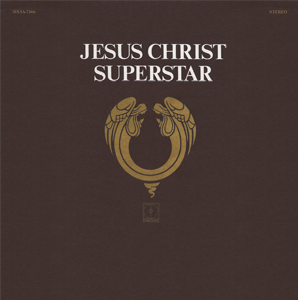
1971 - Jesus Christ Superstar
Music by Andrew Lloyd Webber (Evita, Phantom of the Opera, and Cats)
Lyrics by Tim Rice (Evita, Chess, and The Lion King)

Genesis: Andrew Lloyd Webber and Tim Rice had already written Joseph and the Amazing Technicolor Dreamcoat together, but that had been for a school production and they were unknowns at the time. They first released Superstar as a concept album in 1970 and it's quick rise to #1 paved the way for two lengthy careers in musical theatre.
Productions: The original Broadway production opened on October 12, 1971 and ran for 18 months. A film version, filmed in Israel, was made in 1973. It has since been produced all over the world and seen many U.S. tours.
Musical Style: Rock Opera
Hit Songs: Murray Head released a single version of "Superstar" in 1971 which reached #14 in the U.S. The same year Helen Reddy recorded a version of "I Don't Know How to Love Him" which reached #12 in the U.S. Yvonne Elliman also had a chart reaching single with "Everything's Alright".
Based On: The Gospel of John from Jesus entering Jerusalem to his crucifixion.
Famous Actors: Yvonne Elliman, who later had a #1 hit with "If I Can't Have You" from Saturday Night Fever, had her career take off with the role of Mary Magdelene, which she played on the concept album, in the original Broadway cast and in the 1973 film. The concept album's Judas, Murray Head most famous for his recording of "One Night in Bangkok" from Chess, and the original Broadway Judas, Ben Vareen most famous for later starring in the musical Pippin and the filmAll That Jazz, also saw their careers take off after their involvement.
Innovation: Jesus Christ Superstar portrayed Judas as a main character. Rather than the villain, he was portrayed sympathetically as a tragic hero trying to prevent Jesus from inciting the Romans to destroy the Jewish people.
Interesting Fact: After the concept album was produced productions of the show began popping up without the authors' consent. They sued and the subsequent ruling is one of the foundations of theatrical copyright law.


1971 - Godspell
Music by Stephen Schwartz (Pippin, Pocahontas and Wicked)
Lyrics primarily from the Episcopal Hymnal
Book by John-Michael Tebelak

Genesis: The show was originally John-Michael Tebelak's thesis project at Carnegie Mellon University. After a two week run at La MaMa in New York Stephen Schwartz was brought in to rewrite the music.
Productions: Godspell opened Off-Broadway at the Promenade Theatre on August 10, 1971. It moved to Broadway in 1976 and spawned a film adaptation in 1973. Since then it has become a community theater mainstay, seeing wildly different interpretations of it's simply set tale.
Musical Style: An eclectic mix of musical theater styles.
Hit Songs: "Day By Day," which reached #13 in the U.S. Other popular songs include "By My Side" and "All for the Best."
Based On: The parables in the Gospel of Matthew.
Famous Actors: The film adaptation of Godspell was the film debut of Victor Garber who had been in the Original Broadway Cast of Sweeney Todd and later would be in the film Titanic. In the ensemble of both the original cast and the film was Lynne Thigpen, known to a later generation as the chief in PBS' Where in the World is Carmen Sandiego.
Innovation: Inspired by Dr. Harvey Cox's "Christ the Harlequin," Godspell focused on the festivity, playfullness and delight in the Jesus story.
Interesting Fact: Stephen Schwartz has said Godspell is realy about the building of a community. His song "Beautiful City" was written for the film and emphasizes that idea. While not in the script of the musical, the rights allow productions to insert the song into the show wherever they think it fits.


1981 - Cotton Patch Gospel

Music and Lyrics by Harry Chapin ("Taxi", "W*O*L*D", and "Cat's in the Cradle")
Book by Tom Key and Russell Treyz

Genesis: Actor Tom Key was looking to write a play transporting Jesus and his story to the present day South. Someone told him about Clarence Jordan's The Cotton Patch Versions of Matthew and John which already did just that. Inspired by Jordan's work, Tom Key and Russell Treyz created a one man show. They asked Harry Chapin to write a couple of songs to start and end the show and he was so excited by it he turned the show into a musical.
Productions: Cotton Patch Gospel opened Off-Broadway on October 21, 1981 and ran for 193 performances. It was filmed in 1988 and has since become a staple musical in the South still performed by dozens of companies each year.
Musical Style: Bluegrass
Hit Songs: "Somethin's Brewin' in Gainesville", "Jubilation", and "I Wonder What Would Happen to This World".
Based On: The Gospel of Matthew
Famous Actors: Adapter Tom Key stared in the original production and continues to perform the show to this day.
Innovation: Cotton Patch Gospel puts Jesus in our own time, effectively exploring how we'd react if he came today.
Interesting Fact: Original Matthew and author Tom Key's life was threatened by the Ku Klux Klan because in the show they are implicated in the murder of Jesus.


Further Reading:
The SF Chronicle's Review of Lorraine Hansbury Theatre's current production of Black Nativity: http://www.sfgate.com/cgi-bin/article.cgi?f=/c/a/2009/12/16/DDDV1B47OG.DTL

Wikipedia's article on Jesus Christ Superstar: http://en.wikipedia.org/wiki/Jesus_Christ_Superstar

Musicalschwartz.com's Godspell page: http://www.musicalschwartz.com/godspell.htm

Loren Collins' Cotton Patch Gospel Website: http://www.lorencollins.net/cottonpatchgospel

The full text of Clarence Jordan's Cotton Patch Gospels: http://rockhay.tripod.com/cottonpatch/

*All photos from www.amazon.com except "Cotton Patch Gospel" which is from http://www.lorencollins.net/cottonpatchgospel/ and "Jesus Christ Superstar" which is from www.wikipedia.com

Thursday, December 10, 2009

The Life of Cotton Patch Gospel Composer Harry Chapin

Singer/songwriter Harry Chapin wrote the music to Cotton Patch Gospel right before he died in 1981. Its catchy music brings to life the funny and moving story while bringing light to the hypocrisy of human apathy. It is the culmination of a life dedicated to great music and humanitarianism.


Harry Chapin was born in New York City, the second of four children. His father left the family when he was eight and went and toured as a drummer with the big bands of the era. After high school Chapin spent three months at the Air Force Academy. He then twice flunked out of Cornell University. He went into a band, recording an album with two of his brothers, but the album was unsuccessful. To avoid being drafted his brothers had to drop the band and go to college. Harry Chapin started working in film. While writing a screenplay, he was hired to give guitar lessons to Sandy Chapman so she could play songs to her three children. In 1968 Legendary Champions, the documentary film that came from that screenplay, was nominated for an Academy Award and Chapin became father to thethree children and husband to Sandy Chapman.

Chapin found, while his passion was in storytelling, his drive was still to make music. He combined the two to start writing his now famous, story-songs. In 1971 he pulled together a band and soon caught the attention of Elektra. His debut album Heads and Tales was on the charts for over half of 1972. It’s song “Taxi” became the most requested song in America for ten weeks.


A year later Short Stories produced “W.O.L.D.” which was in the top 50 and the next year Verities and Balderdash became Chapin’s first gold album. The now classic “Cat’s in the Cradle” from that album quickly flew to number one.


Through the rest of the seventies he made seven more popular albums. His solo show, The Night That Made America Famous ran on Broadway for 75 performances and was nominated for two Tony awards.

Despite his great success as a storyteller and musician, Chapin’s greatest legacy is that of activist. Before charity concerts were vogue, Chapin did a hundred a year, raising over 5 million dollars. In 1975 he co-founded World Hunger Year (WHY), an organization dedicated to addressing the root causes of hunger and poverty. For his work to end hunger he was posthumously awarded the Congressional Gold Medal. He also served as a delegate to the Democractic National Convention and was dedicated towards bringing the arts to Long Island, serving on numerous boards there.

In 1981, at the age of 38, Chapin tragically died in a car crash while driving to a benefit performance. His final work, Cotton Patch Gospel, was posthumously produced in New York a few months later. This musical was based on a book by Dr. Clarence Jordan, the founder of Habitat for Humanity. It recontextualized the story of Jesus into the modern day and explored how contemporary Christians would respond to Jesus’ arrival. Harry Chapin’s epitath was taken from the final song from that show “I Wonder What Would Happen to this World”

Oh if a man tried
To take his time on Earth
And prove before he died
What one man’s life could be worth
I wonder what would happen

to this world


Further Reading & Photo Credits:

Harry Chapin photo from Rolling Stone's Biography: http://www.rollingstone.com/artists/harrychapin/biography


Gravestone photo from Wikipedia Article: http://en.wikipedia.org/wiki/Harry_Chapin#Legacy


Rolling Stone Obituary from the Harry Chapin Archive: http://harrychapin.com/articles/rsobit.shtml


Autobiographical Statement from The Harry Chapin Archive: http://harrychapin.com/articles/bio.shtml


"Music Rewind: The Activism & Storytelling Of Harry Chapin" by Hal Licino: http://hubpages.com/hub/Music-Rewind-The-Activism-Storytelling-Of-Harry-Chapin

Wednesday, December 2, 2009

Interview with "Cotton Patch Gospel" Director, Marilyn Langbehn

Cotton Patch Gospel opened last week to standing ovations. During rehearsals director Marilyn Langbehn sat down with us to let us know what makes the show work.

What brought you to Cotton Patch Gospel? Why this show?

I’m not from the South, I quite honestly don’t know where my affinity for this material actually comes from, except that my grandmother was very much in the old time gospel tradition. I remember as a very little girl going to the Assemblies of God church with her, and honest to God this church was built out of logs; it looked like a log cabin. That whole revivalist feeling around religion and very simple storytelling was what she was attracted to and what she made sure I was exposed to. So, from the time I was a little girl, there was this attraction or this affinity for this style of storytelling and this style of preaching. There’s something about the simplicity of it; there’s something about the music, the bluegrass feel and the fact that Harry Chapin wrote it. He was somebody that I was very keen on when I was in college. Just basically the whole package was very exciting to me, and I’m very glad they asked me to do it.

This show is about the life of Jesus who is, of course, a major figure in Christianity. How do you feel this show speaks to Christians and how does it speak to non-Christians?

The story of Jesus, is one of the great stories that we have, regardless of where you are on the faith perspective. It’s always interesting to me to see the various ways in which it gets told. You have the big three theatrical tellings of it, from Jesus Christ Superstar to this show to Godspell. Those are all very different presentations of essentially the same story. The thing that strikes me about this particular telling is that what you’ve got is the message of Jesus distilled down to its very essence, which is essentially do unto others. At the end of the day, what they want you to do is treat everybody the way you want to be treated, and that’s what they present to you as the message.

You’ve directed Superstar, how does your approach to this show differ from how you directed that, despite both telling the story of Jesus?

Superstar has by intention a much harder edge to it. You know, the rock opera format is designed to drive things in a certain way. This is very much told in the way that we all told stories when we were kids: I be the bad guy and you be the good guy. And that’s all the instruction that you need and that’s all the context that you need in order to just branch off and spin a fantasy for yourself. The way that this is put together, Edward plays Matthew who is the narrator and one of the disciples. All he has to do is play the most basic of contexts for us and we instantly know where we are. There are no props in this show; there are no set changes. The spectacle is that of the inside of a barn and a Chautauqua meeting. It’s a fundamental storytelling style that we all grew up with and are so familiar with.

How has it been working with Edward? What’s it like to direct a one man show for much of the piece.

I worked with Edward one other time. He was wonderful, and ever since that time we’ve been in communication back and forth saying we need to find a time and a way to work together again. It all just sort of fell into place. He’s perfect for it. He understands this method of storytelling. He understands how this music works on a whole different level. He’s very generous with his emotional self in the telling of the story, generous to his fellow actors and generous with the audience. It’s been an interesting and lovely experience working with him. It’s a fascinating process to have just the two of you in a room trying to solve the problems of the text and make sure you’re telling it in as engaging and as theatrical a way as you possibly can. It’s fun.

Then there’s the trio, where did they come from and what do they give the show?

It’s really interesting, because the music is written to be sung by the band, which in the original production was four guys. That’s one of the interesting things about this piece; the authors recognized that you can take this basic structure and do a lot of different things with it. In all the notes that they send along with the piece they say “you’re probably not going to find what we created this piece with,” meaning one actor and these band members “so make it work for you.” When we had the auditions, it became clear that the three women we have were the best musicians to tell this part of the story. So instead of a four man quartet we have a three woman trio singing this. Rona Siddiqui, our music director who is also one of the singers, had to take the music and restructure the harmonies in such a way that they fell more naturally into the women’s range. She’s just done an amazing job, not only in recrafting all of that, but then creating that specific sound that the trio has. The sound that the women have is tight, rich and exactly right. It’s just thrilling. It is a whole new way of looking at the material.

You do have a bluegrass band as well, yes?

Oh my God, the band! Well if this doesn’t knock people’s socks off then I’ll throw in with you. The one thing that I knew from experience about bluegrass musicians is that they are a rare breed, a specific type of musician, and if they are any good, they are very good at what they do. One of those things you know to look for if you’ve done enough musicals is when the singers know that the band has got their backs and the band knows that the singers are worth it. It’s this incredibly magical thing that happens amongst disparate musicians when they become a unit. They become a whole sound of voices and instruments together, and I’m watching that happen in rehearsal. You can’t not dance a little in your seat when you hear this music, and you can’t help but be moved at the simplicity and genuine honesty of the lyrics.

As a director there’s always that moment when something’s working and you have some sort of infallible physical signal that happens to you. You know, when the hair stands up on the back of your neck, that kind of thing. It takes a lot for that to happen to me. The moment when Herod orders the henchmen to find baby Jesus and kill him, the massacre of the innocents for those of you that are following along in your hymnals, is heart-breaking. They end up killing all the babies under the age of two, and in this version they toss a bomb into a church nursery. Of course Jesus isn’t there, but it kills 14 babies and toddlers, which harks back to what happened in the South in the civil rights struggle. Erica Richardson, who is this glorious-voiced African American actress, is singing the role of the mother in that particular number. It doesn’t take a lot of imagination to see how far we have and haven’t come.

Anything else give you that sensation?

It happens several times, and I won’t tell you where they all are, but if I’m dancing in my seat that’s a pretty good sign. Katie Kimball, the other trio member, has the most open face. She understands the joy of the music in a way that is completely unclouded by any kind of guile or bravado or need to protect. She is just completely available to the emotional content of the piece and in the music that she is singing. When she and the rest of the trio started to sing “Going to Atlanta” last night, that group of women were so excited I thought they were going to blow the roof off. It’s thrilling. I have such fun. I do

Wednesday, October 28, 2009

The Art of The Heidi Chronicles

It's the final week of The Heidi Chronicles. For those who have seen our production, you'll remember that after each scene a painting is taken off of the wall. We were very excited to have these paintings; they were painted by artist Nicola McCarthy specifically for the show to evoke the emotional and historical context for the scene during which they are highlighted. Each painting is also an homage to the work of a particular twentieth century female artist and Nicola took time to write a little about her inspirations for us. She also let us put photos of her paintings above each description and a photo of one of the paintings that inspired hers on the right or below.

Act One, Scene One: Painting inspired by Bridget Riley’s Drift series


Bridget Riley is one of the leading lights of the 60's Op Art movement, she inspired a wave of bold graphic design in fashion. Her paintings present a great variety of geometric forms that produce sensations of movement or colour, said to induce sensations in viewers as varied as seasickness and sky diving. If you stare at them for a minute, you will see the sense of movement – vibrating, flashing, throbbing – and perceive illusions of perspective or 3-dimensional space. The effect is mesmerizing, illuminating... but dizzying!

Act One, Scene Two: Painting inspired by Judy Chicago’s Through The Flower


Judy Chicago is a feminist artist who has been making work since the mid 1960s. Her earliest forays into art-making coincided with the rise of Minimalism, which she eventually abandoned in favor of art she believed to have greater content and relevance. Major works include The Dinner Party and The Holocaust Project. She came to be known as an essentialist as she saw something innate and essential to the female species that could be represented by round objects and openings (i.e. female sex organs).

Act One, Scene Three: Painting inspired by Lee Krasner’s Black and White and Pink Collage


Lee Krasner was an influential abstract expressionist painter in the second half of the 20th century. She married artist Jackson Pollock, who was also influential in the Abstract Expressionism movement. Comrades in art, Pollock and Krasner fought a battle for legitimacy, impulsiveness and individual expression. They opposed an old-fashioned, conformist, and repressed culture unreceptive to these values, which was put off by the intricacy of Modernism in general.

Act One, Scene Four: Painting inspired by the Guerrilla Girls’ Do women have to be naked to get into the Met Museum?


The Guerrilla Girls are a group of radical feminist artists established in New York City in 1985, known for using creative posters to promote women and people of color in the arts. Their first work was putting up posters on the streets of New York decrying the gender and racial imbalance of artists represented in galleries and museums. Over the years they expanded their activism to examine Hollywood and the film industry, popular culture, gender stereotyping and corruption in the art world. In 2001 they split into three groups, Guerrilla Girls, Inc.; GuerrillaGirlsBroadBand and Guerrilla Girls On Tour.

Act One, Scene Five: Painting inspired by Yoko Ono’s Painting to Hammer a Nail


Yoko Ono Lennon is a Japanese-American artist and musician. She is known for her marriage to John Lennon and for her work as an avant-garde artist and musician. Ono was an explorer of conceptual and performance art.


Act Two, Scene One: Painting inspired by Alice Neel’s The Pregnant Woman


Alice Neel (January 28, 1900 – October 13, 1984) was an American artist known for her oil on canvas portraits of friends, family, lovers, poets, artists and strangers. Her paintings are notable for their expressionistic use of line and color, psychological acumen, and emotional intensity.

Act Two, Scene Two: Painting inspired by Barbara Kruger’s Untitled (Your body is a battleground)


Barbara Kruger is an American conceptual artist. Much of Kruger's graphic work consists of black-and-white photographs with overlaid captions set in white-on-red Futura Bold Oblique. The juxtaposition of Kruger's imagery with text containing criticism of sexism and the circulation of power within cultures is a recurring motif in the work. The text in her work of the 1980s includes such phrases as "Your comfort is my silence" (1981), "you invest in the divinity of the masterpiece" (1982), and "I shop therefore I am" (1987). She has said that "I work with pictures and words because they have the ability to determine who we are and who we aren’t."

Act Two, Scene Four: Painting inspired by Joan Mitchell’s Sunflower Series


Joan Mitchell was a ‘Second Generation’ Abstract Expressionist painter. Along with Lee Krasner, Grace Hartigan, and Helen Frankenthaler she was one of her era's few female painters to gain critical and public acclaim. Her paintings and editioned prints can be seen in major museums and collections across America and Europe.

Act Two, Scene Five: Painting inspired by Marlene Dumas’ The Painter


Marlene Dumas was born in Cape Town, South Africa. She studied at the University of Cape Town from 1972 to 1975 and moved to the Netherlands on a scholarship when she was 23. She's been living in Amsterdam for many years. She often uses reference material of Polaroid photographs of her friends and lovers, whilst she also references magazines and pornographic material. Marlene Dumas also paints portraits of children and erotic scenes to impact the world of contemporary art.

Photo Credits:
All photos of Nicola McCarthy's paintings taken by Fred Pitts
Drift No. 2, Through the Flower, Do Women Have to be Naked to get into the Met Museum? and The Painter from Artnet (http://www.artnet.com)
Black and White and Pink Collage from The City Review (http://www.thecityreview.com/krasner.html)
Paiting to Hammer a Nail in from AskArt (http://www.askart.com/askart/o/yoko_ono/yoko_ono.aspx)
Yves by Joan Mitchell from Hauser & Wirth (http://www.hauserwirth.com/exhibitions/322/joan-mitchell-sunflowers/view/)
Pregnant Woman from ArtConcerns.com (http://www.artconcerns.net/2007MayBaroda/html/baroda_birthright.htm)

Untitled (Your body is a battleground) from Stanford BodyWorks Syllabus (http://www.stanford.edu/dept/HPST/BodyWorks/11300/04.htm)

Wednesday, October 7, 2009

Public Transit

The Heidi Chronicles opened a week ago. We’ve had a wonderful week of performances and the audience response has been great. People love the play and seem to be almost as excited as we are about our new space. If you haven’t got your tickets already, get them now at Brown Paper Tickets. We also posted some great photos from the production on our website, be sure to check them out.

When we first started coming to the Next Stage we were surprised how easy it is to get there. On the website there’s driving directions, but here’s the easiest way to do it via public transportation.

-From BART-
Get off at Montgomery St. Station.
Walk one block northeast on Market St. to Sutter St. & Sansome St.
Catch the 2, 3 or 4 Muni outbound. Weekdays 5:00-7:30 pm one arrives every 2-6 minutes. Weekends it’s every 7-8 minutes.
Get off at Post St. & Gough St.
Walk two and a half blocks north on Gough St. to The Next Stage.

From other BART stations you can take the 49 bus (Mission 16th St. & 24th St.), the 47 bus (Civic Center) and the California Cable Car (Embarcadero). We use the Montgomery station because of the frequency of the buses there.

-Returning to BART-
The 3 is the only bus to Montgomery BART still running after our show. Walk back to Post St. & Gough St. and wait there. It runs every 20 minutes until after 1:00 am. To avoid a long wait we recommend you print out the schedule from 511.org.

-From Other San Francisco Locations-
For those already in the city, the California Cable Car, the 1, 3, 47, and 49 buses all have stops within four blocks of our theater and run til after midnight seven days a week. 511.org has schedules and maps for all the lines.